2025 Impact Report
Transforming the cacao industry. From the origins.
Manifesto
What we believe. What we do. Why it matters.
Over 15 years ago we made ourselves a disruptive promise: to transform the cacao industry in Colombia.
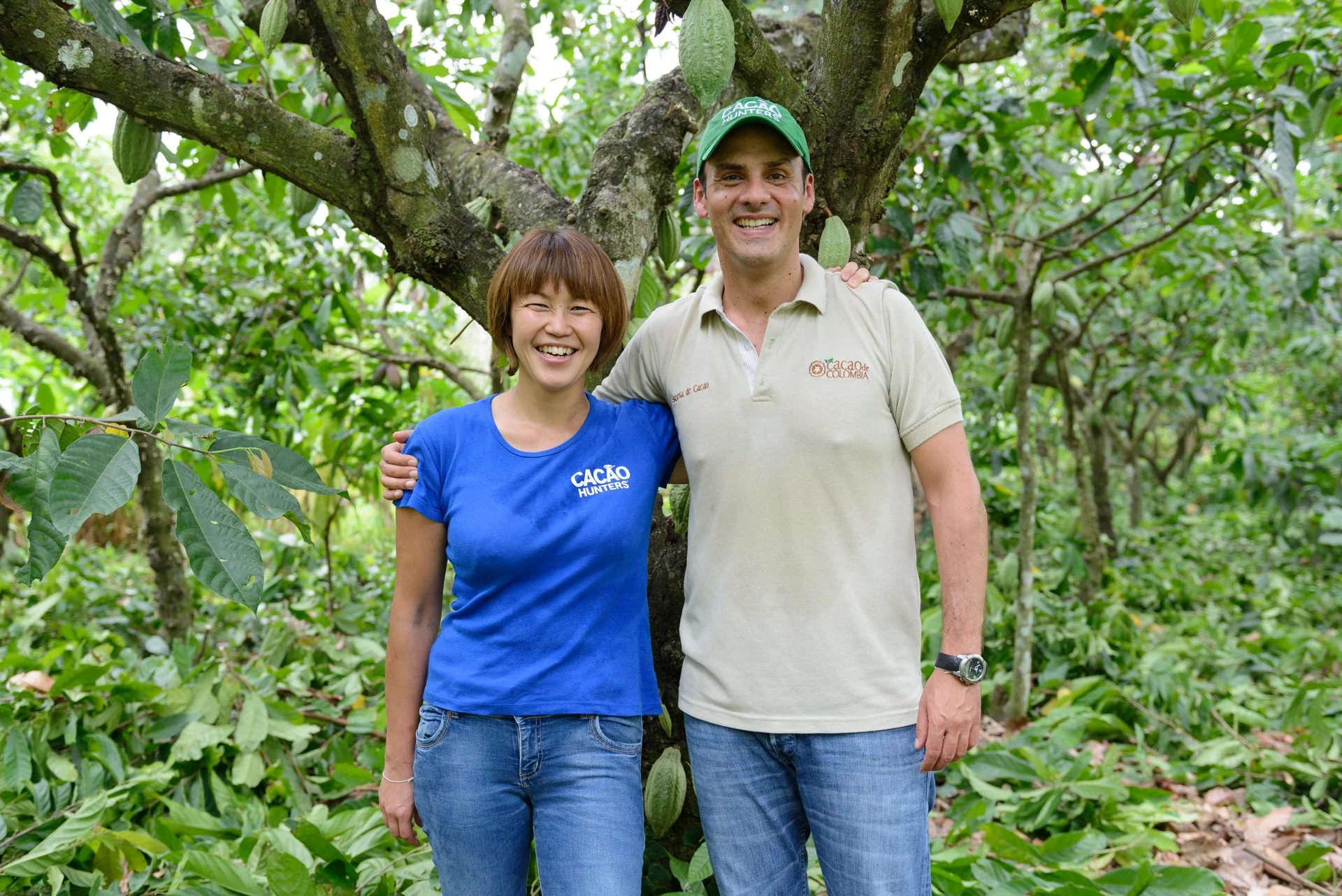
This is not about philanthropy. We are not anyone's saviors. Today we are partners of 22 associations and 2,300 families who have chosen to bet on excellence.
We buy cacao at fair prices — not dictated by the New York stock exchange, but by the real quality of the bean. We pre-finance harvests. We accompany every lot, every fermentation, every drying. And we transform that cacao into chocolate here, in Popayán, Colombia — not in Switzerland, not in Belgium, not anywhere else in the world.
Yes, we have disrupted market prices. And we have done it with pride. Because the only way to protect the chain is by ensuring that everyone wins.
Our story is not about chocolate — in reality, chocolate is the least of it. It is about territories that are reborn, families that thrive, resilient communities, men and women leaders who transform realities.
This report is not a celebration either. It is an exercise in transparency. We are going to tell what worked, what didn't work, and what we still have left to do.
“This report is not about sales figures. It is about brave people, resilient relationships, and territories that thrive.”
Our Story
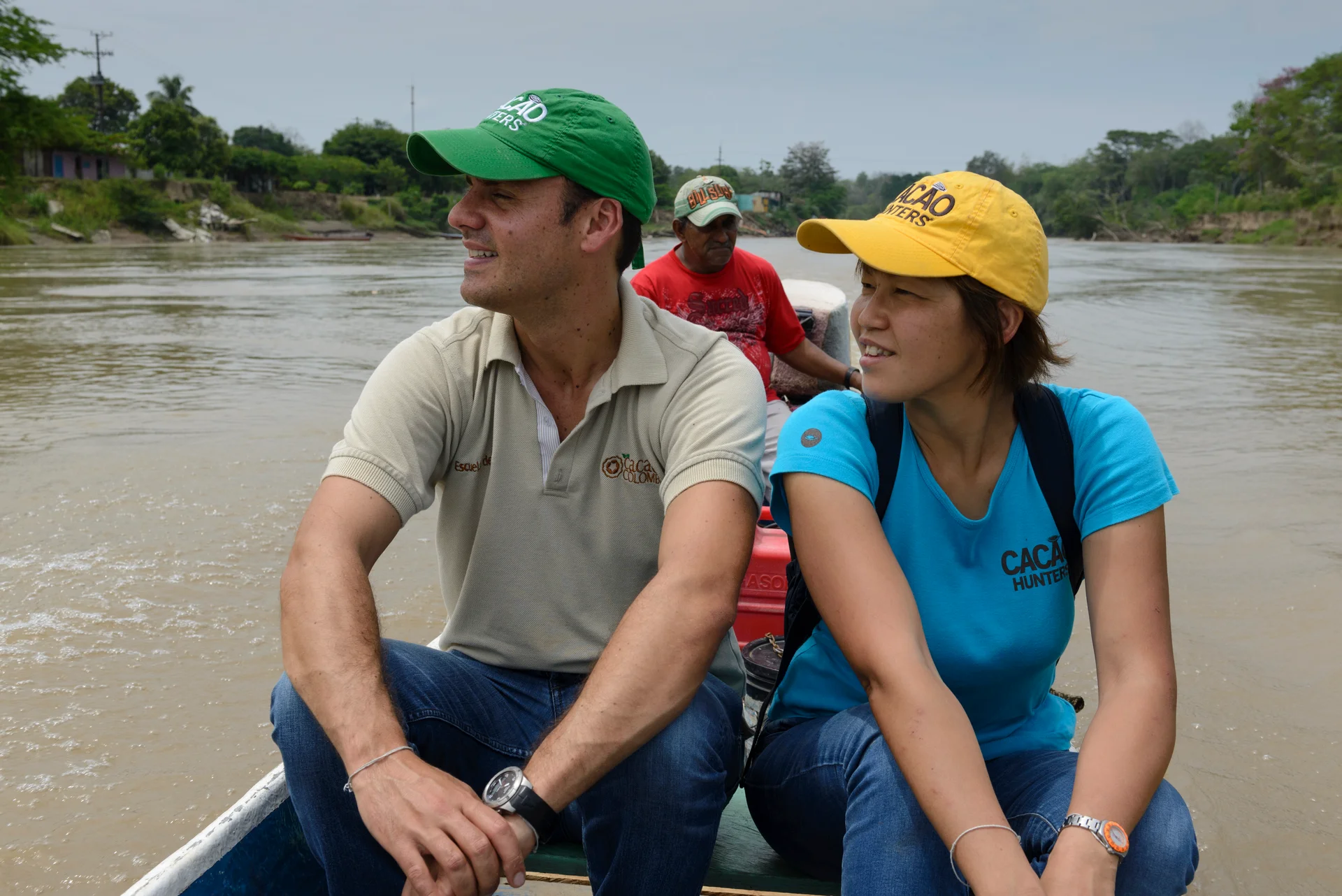
The Beginning
Cacao de Colombia SAS is founded
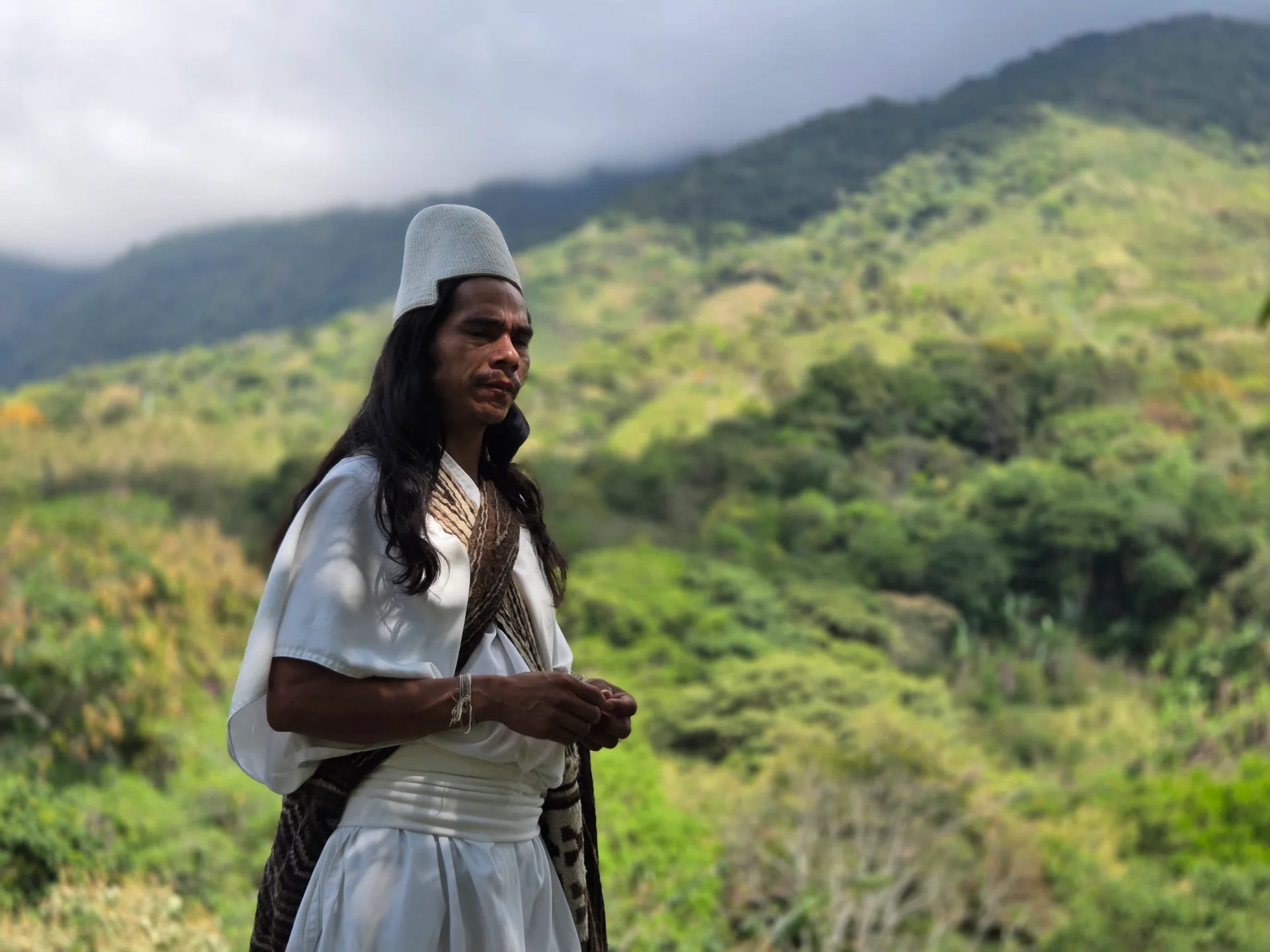
The First Hunt
Discovery of bunsi cacao
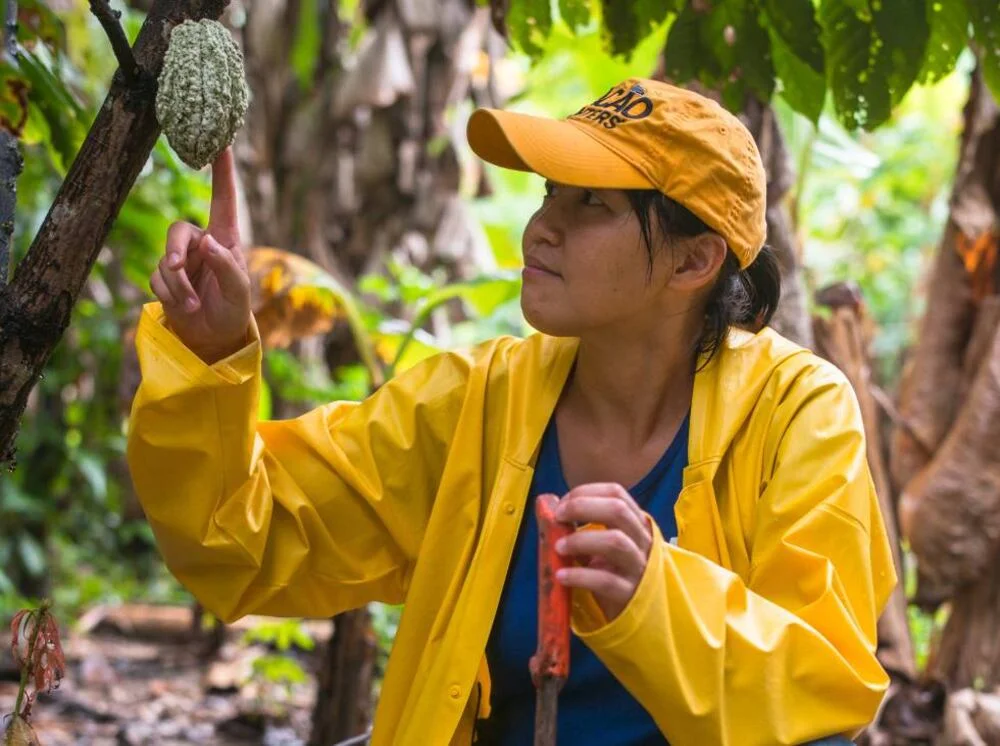
Territorial Expansion
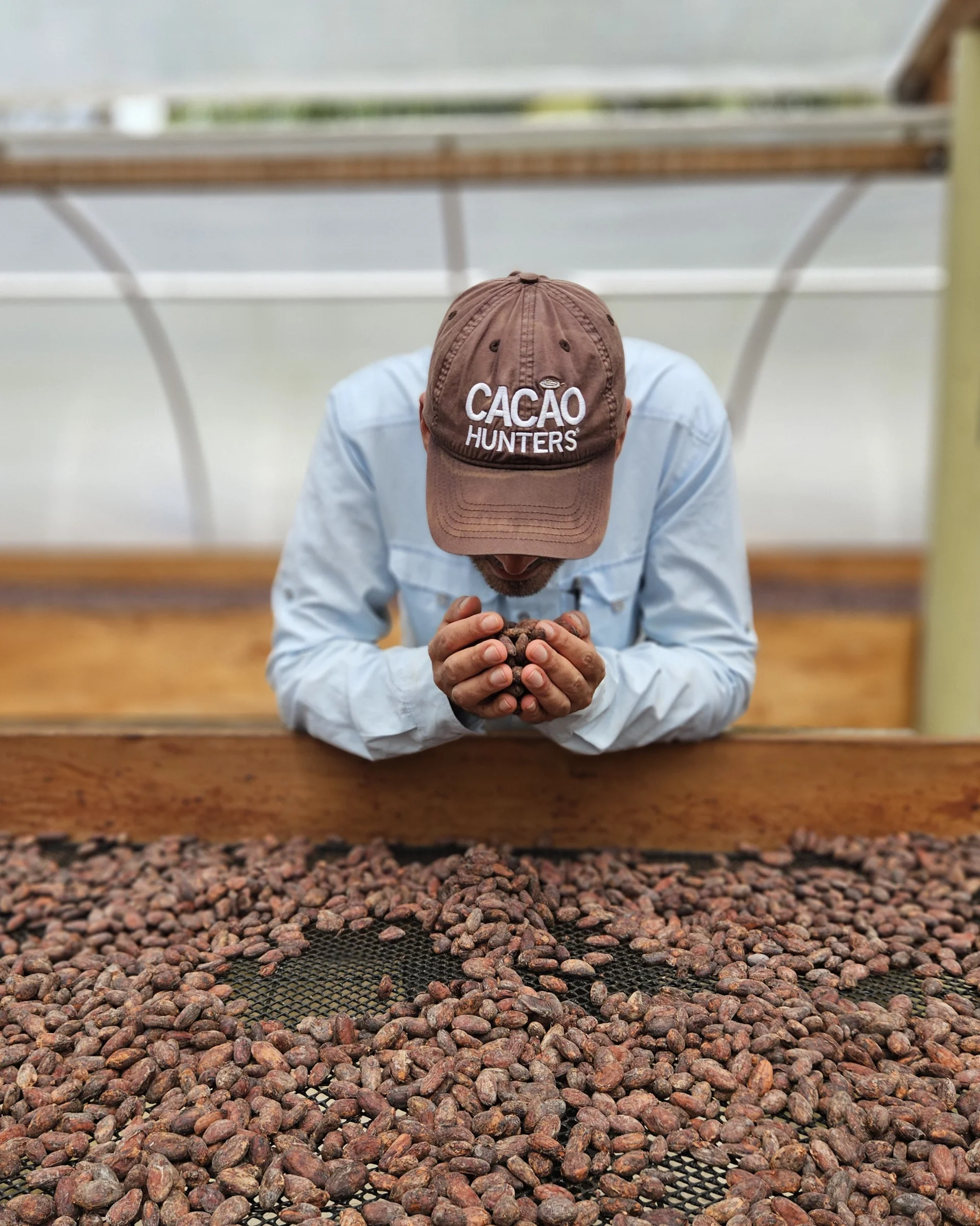
The Decision
The Cacao Hunters brand is born
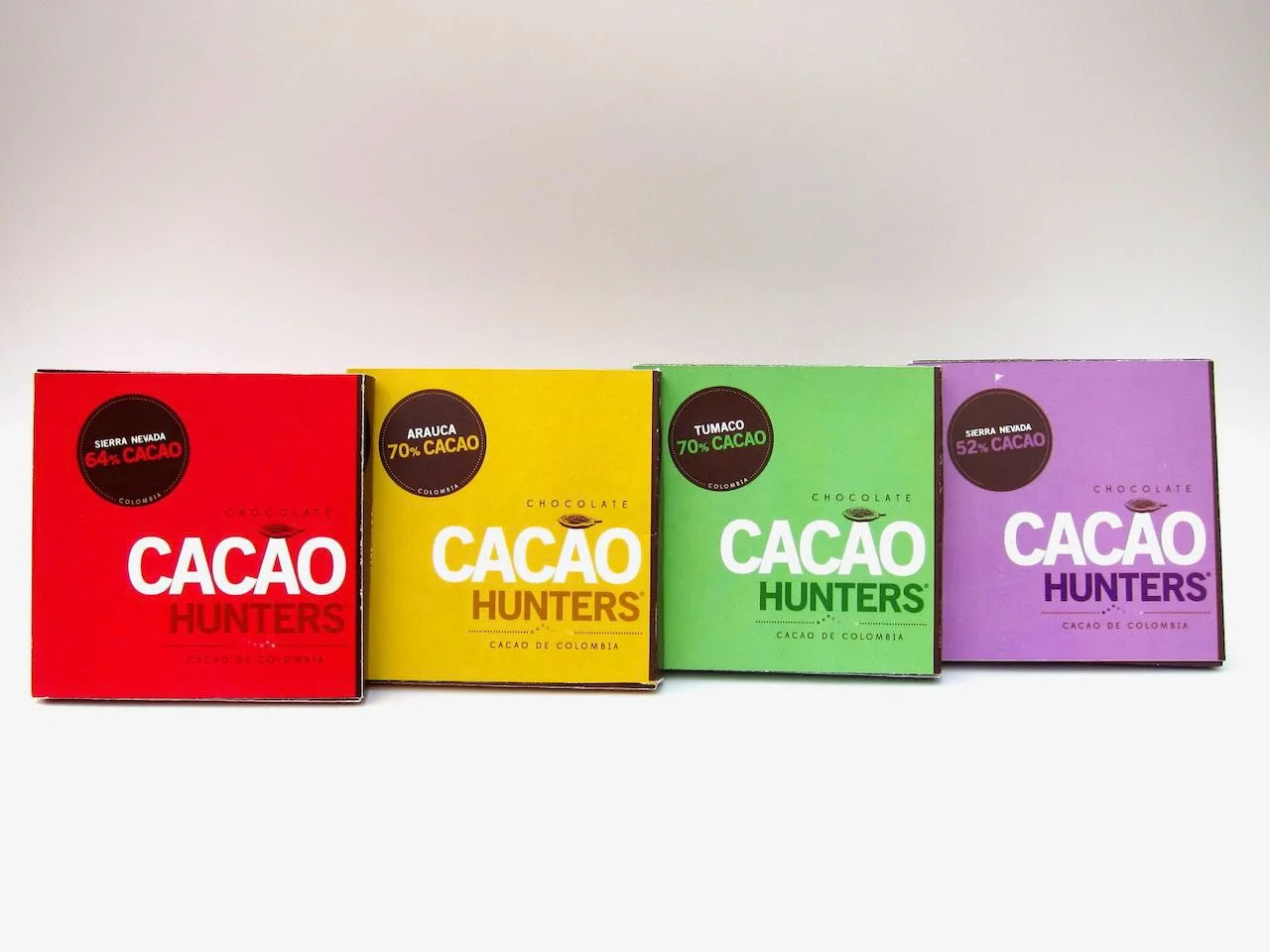
The First Bar
First chocolate bar exported to Japan
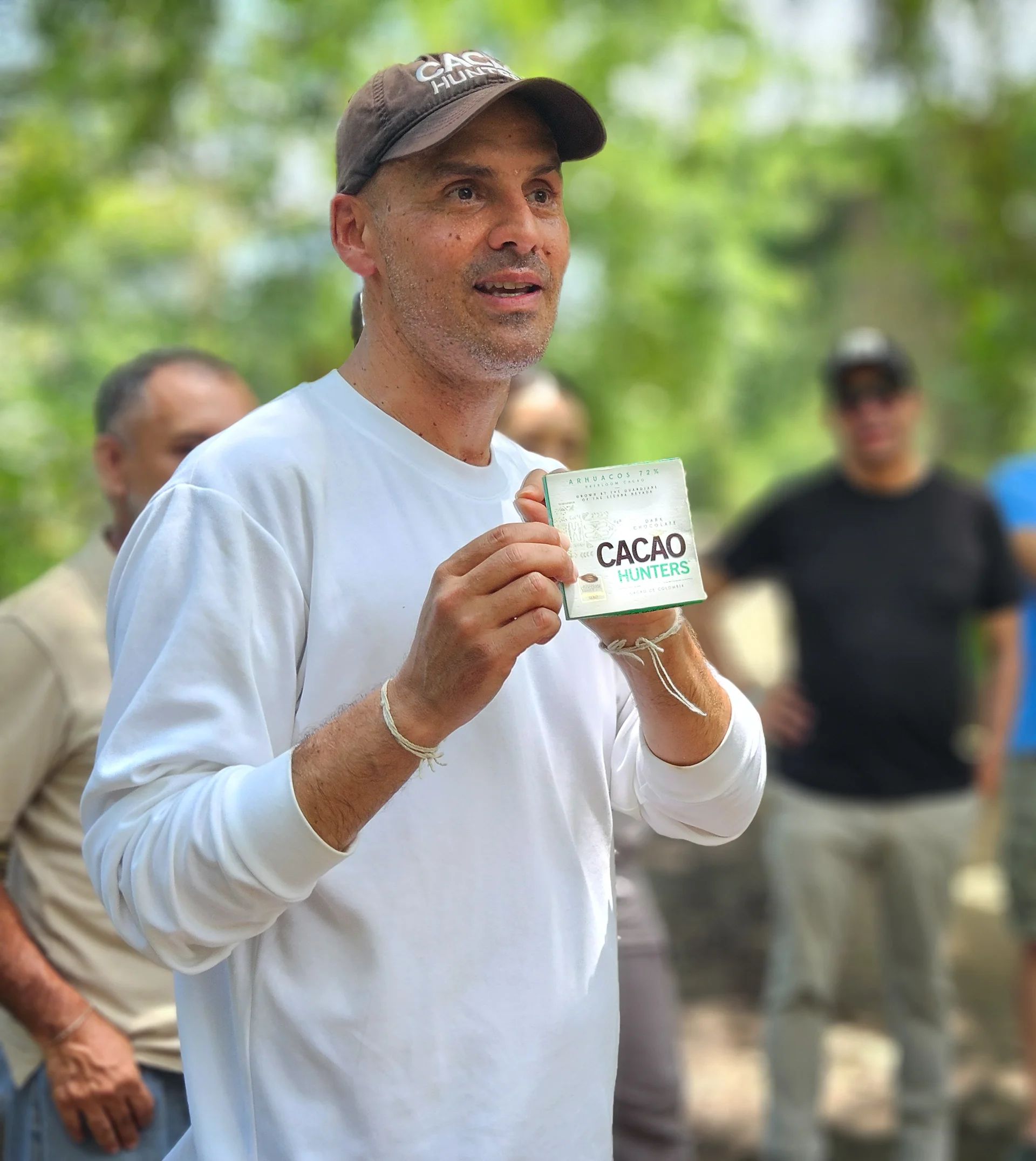
First Gold
Gold at World Final — first producer country to win
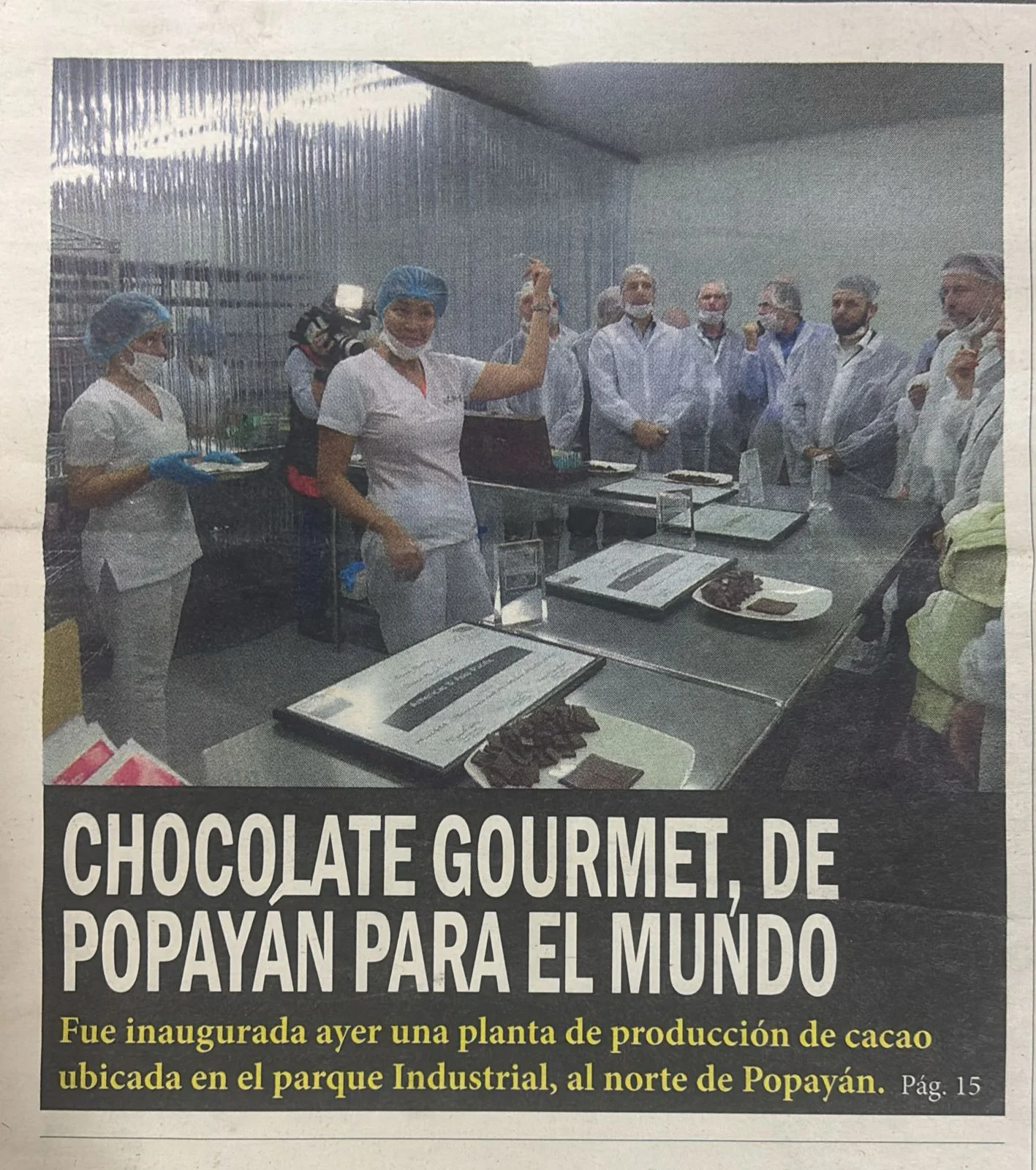
New Factory and Japan
New factory and double Gold
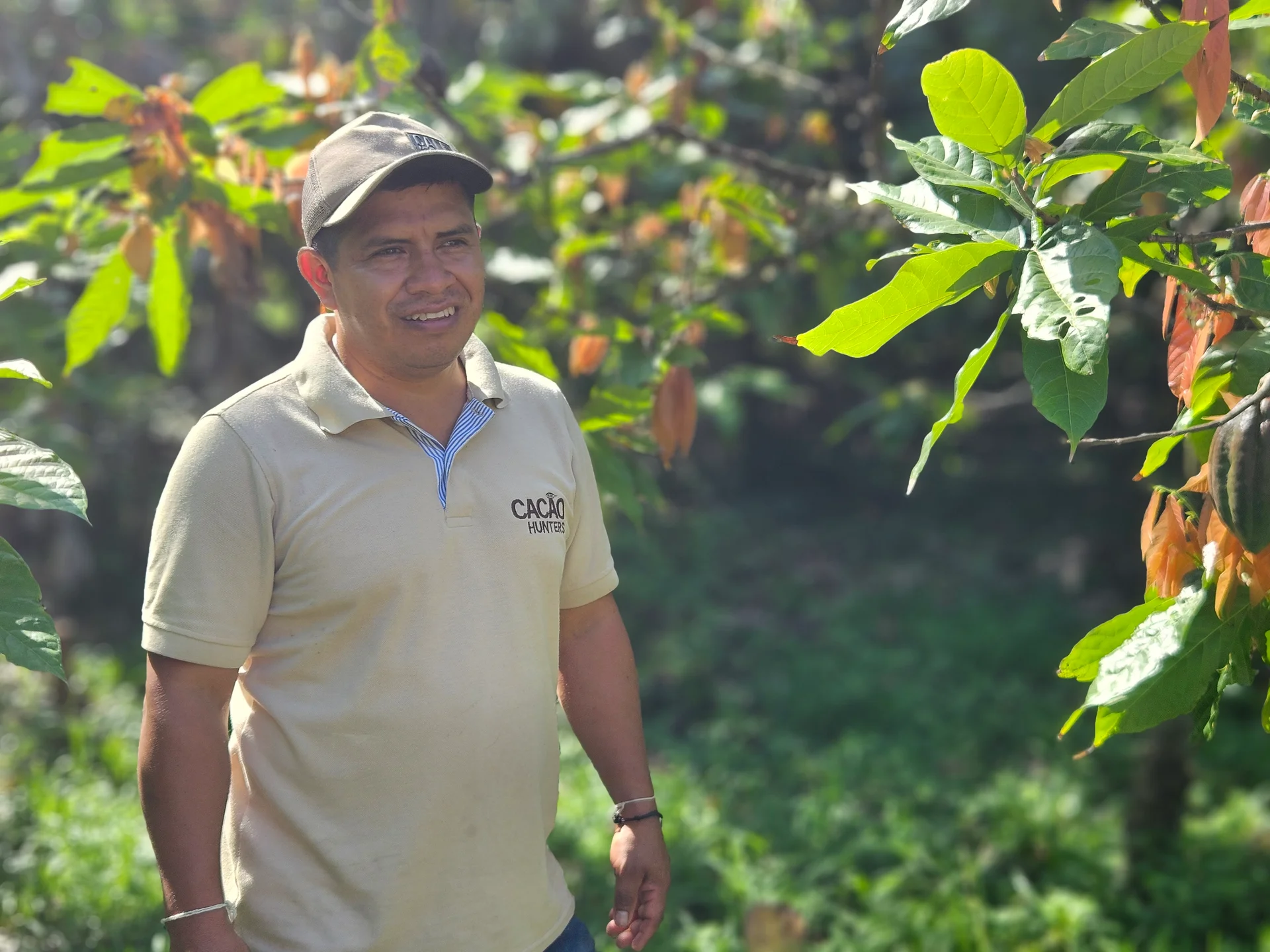
Portfolio Expansion
National Geographic documents the origins

The Pandemic
The Colombia-Japan bridge withstands the storm
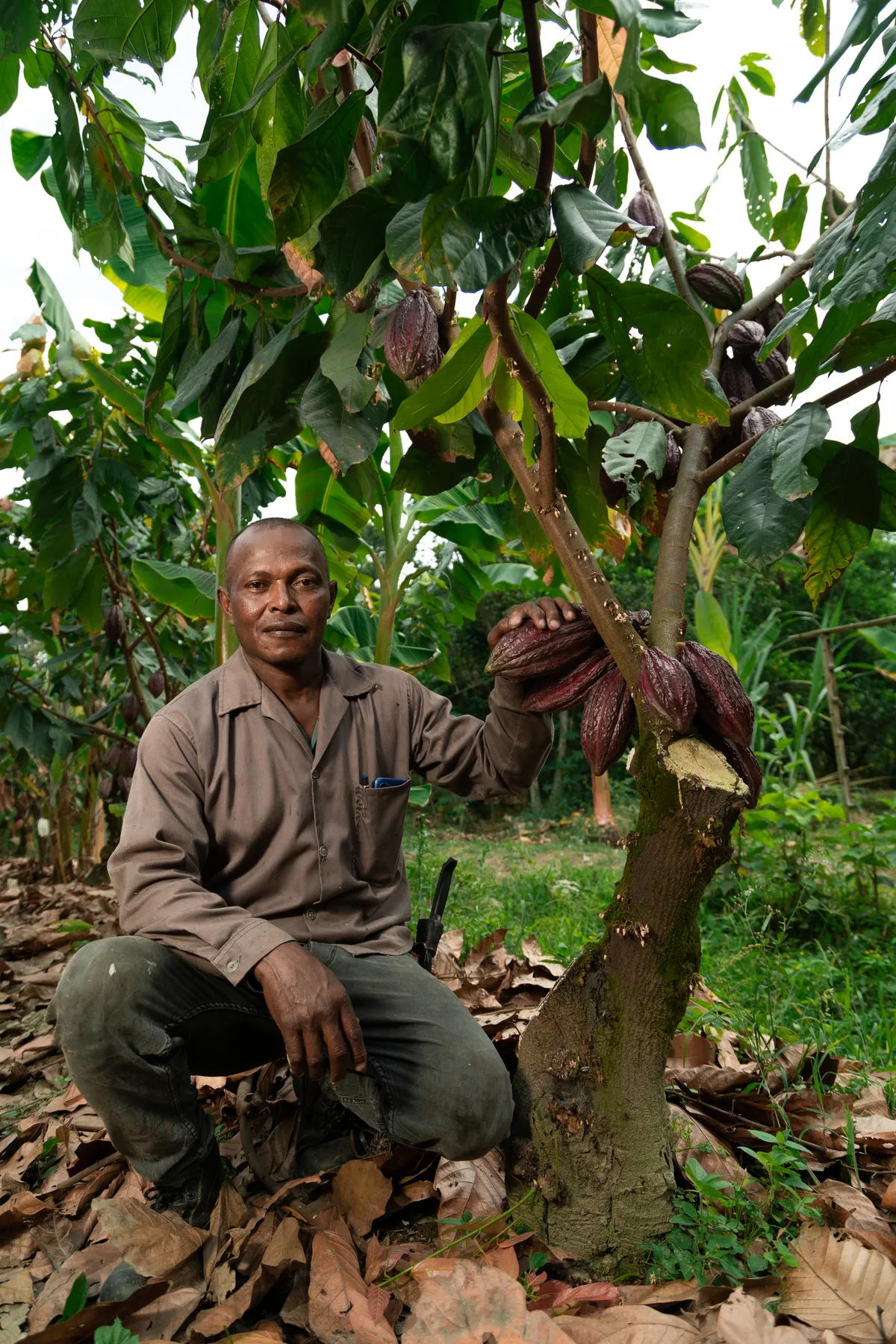
The Hybrid Vehicle
Creation of Fundación Cacao Hunters
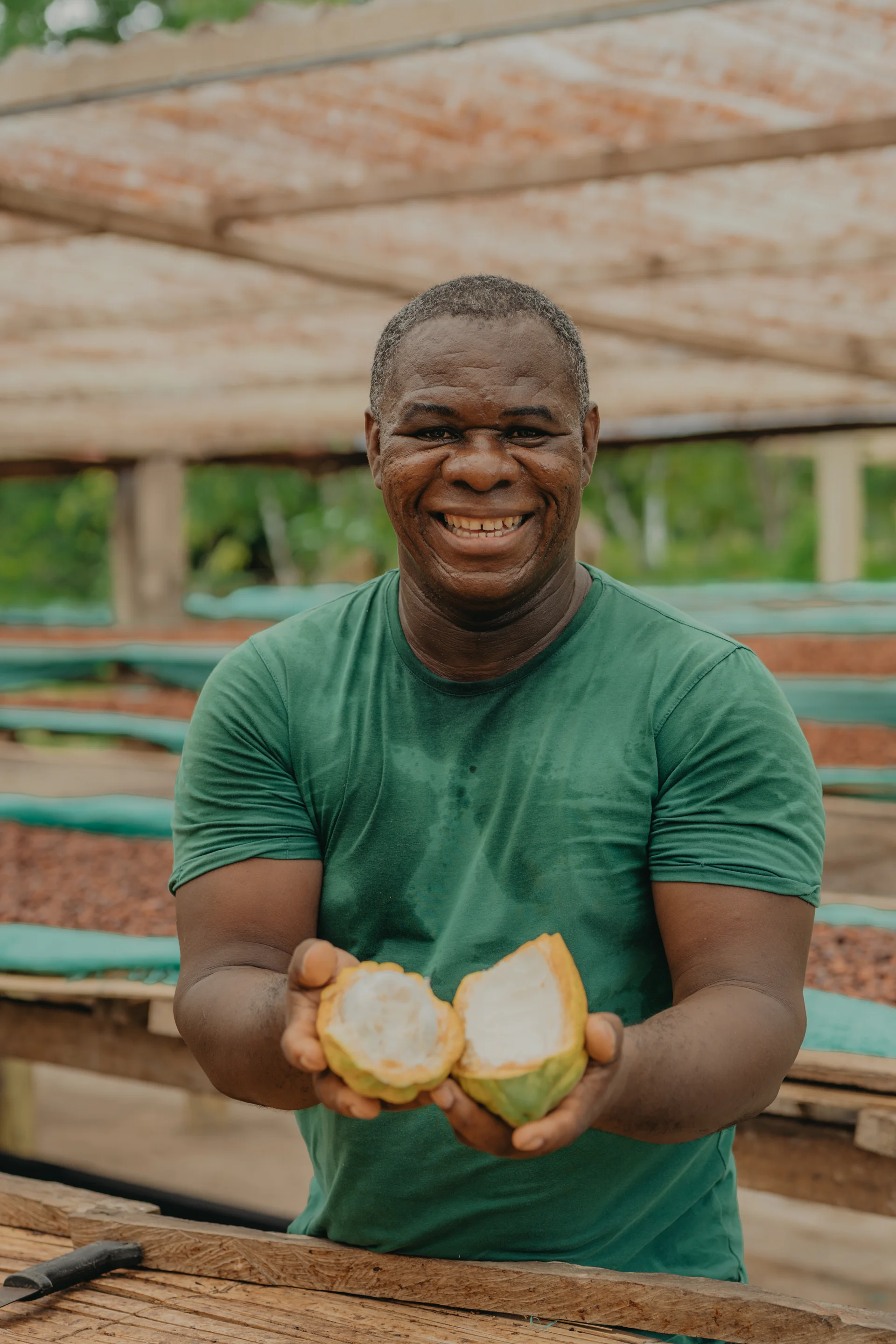
The Measurement
60 Decibels confirms impact — Top 20% in Latam

Today
192 medals. Whole Foods. The best in the world.
Our Story
2009 — 2025
The Beginning
Cacao de Colombia SAS is founded
The First Hunt
Discovery of bunsi cacao
Territorial Expansion
The Decision
The Cacao Hunters brand is born
The First Bar
First chocolate bar exported to Japan
First Gold
Gold at World Final — first producer country to win
New Factory and Japan
New factory and double Gold
Portfolio Expansion
National Geographic documents the origins
The Pandemic
The Colombia-Japan bridge withstands the storm
The Hybrid Vehicle
Creation of Fundación Cacao Hunters
The Measurement
60 Decibels confirms impact — Top 20% in Latam
Today
192 medals. Whole Foods. The best in the world.
Our Impact 2025
A year of progress and challenges
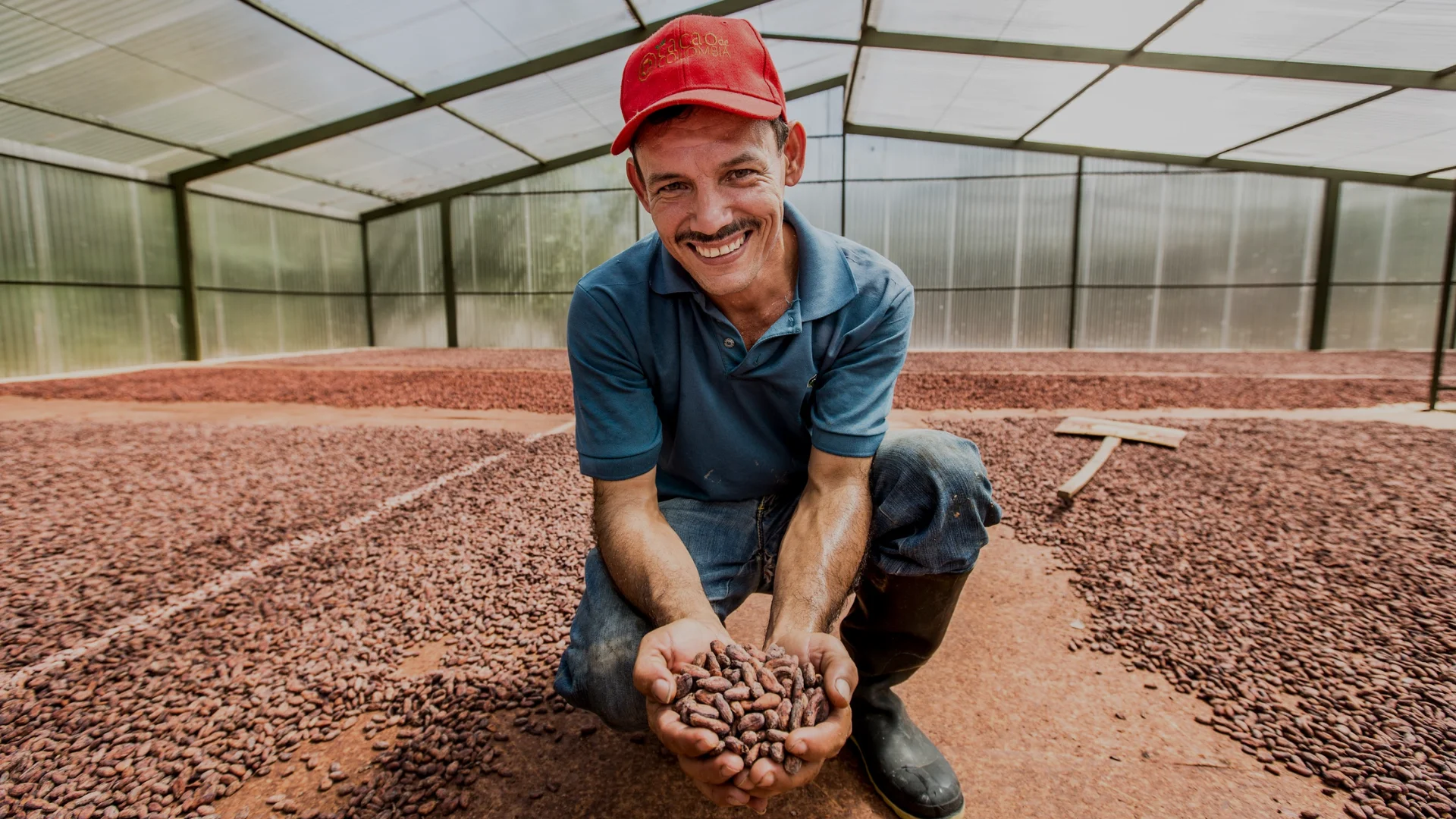
For every peso we earn, over 51 cents go directly back to rural territories. Not as donations — as fair payment for extraordinary cacao, advances that finance the harvest before it arrives, and technical assistance that ensures every lot meets the most demanding global standards.
We pre-finance harvests when no one else will. That means assuming the financial risk so farming families have certainty. In a year where raw material prices soared and our margins compressed, we kept every commitment.
The Serranía del Perijá proves it: from 27 tons in 2024 to 115 in 2025 — a 325% increase. Not through subsidies, but because the model works: better post-harvest, better price, better cacao.
The 8,000+ hectares of cacao we impact with our model are not monocultures. They are multi-strata agroforestry systems — cacao under the shade of fruit trees, timber species, and native plants. A productive forest that protects forest cover, provides pollinator habitat, regenerates soils, and captures more carbon than conventional cacao. This model is not a green accessory: it is the foundation of the sensory quality that sets us apart and the bond with the territories that sustains us.
But quality cannot be sustained on good intentions alone. It requires cash flow, infrastructure, and long-term relationships. All of that costs. And all of it is detailed in the figures that follow.
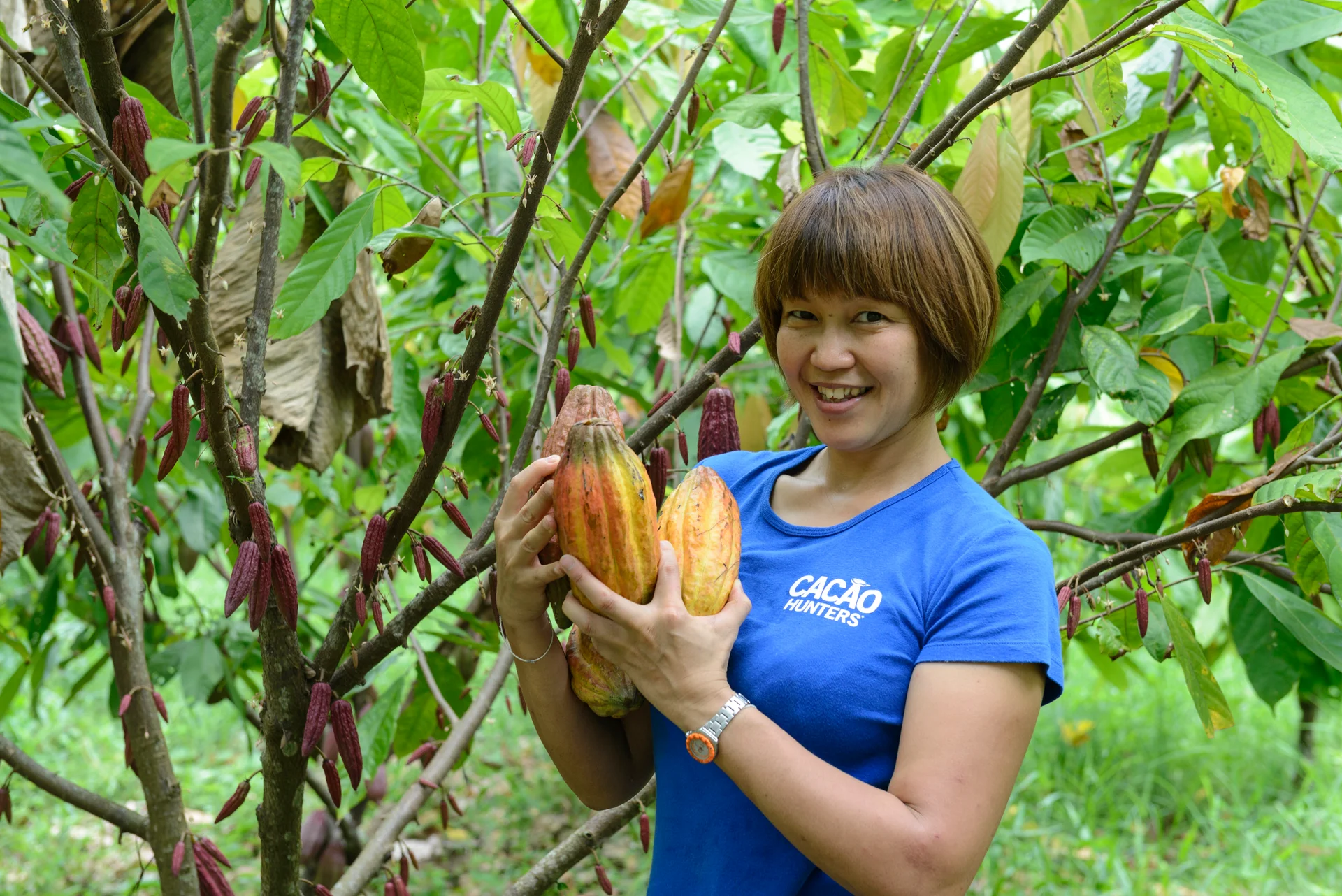
Territorial Impact
Cacao farming families
across 9 departments in Colombia
Allied associations
local producer organizations
Departments
across Colombia
Women-led associations
of 22 allied associations
Agroforestry hectares
living forests, not monocultures
Economic Transfer
Transferred to rural economy
net, direct to territories
Price premium above market
real quality costs more
Advances to associations
the financial lifeline of the chain
2025 revenue
vs. COP $11,630M in 2024
Quality & Commercial
Technical assistance hours
fermentation, drying, quality
Cacao lots reviewed
each lot = a conversation
Specialty cacao commercialized
full traceability
Chocolate sold
Colombia, Japan, Europe, USA
Our Impact. Measured by experts.
Cacao Hunters Impact Report by 60 Decibels
“My quality of life has improved because now we work more as a family, in a more organized way, and with the sales we can buy more things for the home.”
— Arhuaca ProducerSierra Nevada de Santa Marta
“Before, we weren't sure we could sell our products in the best way, but with Cacao Hunters the sales are more secure and at the best price.”
— Arhuaco ProducerSierra Nevada de Santa Marta
“There has been a lot of improvement in the farm crops. There are people who put more love into cacao farming and that greatly influences the economy and prosperity of the town.”
— Producer in Tumaco43 years old
Between September and November 2024, researchers from 60 Decibels, an independent organization specialized in impact measurement, conducted 56 in-person and phone interviews with producers in our chain. 64% were Arhuaco from Sierra Nevada, 36% Afro-Colombian from Tumaco. 70% men, 30% women — a proportion close to the actual distribution of our producer base (64% men, 36% women), lending representativeness to the findings. 14% youth under 35. Average household size: 6 people. 61% have been with the company for less than 2 years, reflecting recent accelerated growth of our producer base. The report was published in February 2025. Although the measurements were conducted in 2024, its findings are fully relevant to our 2025 impact report: they reflect the accumulated relationship between Cacao Hunters and its producers, and constitute the most rigorous baseline we have to measure our progress going forward.
90% confidence level, 6% margin of error. 97% response rate, average duration of 19 minutes per survey. Comparison benchmark: 10 agricultural enterprises in Latin America with 4,366 voices heard.
Quality of life and income
96%
Quality of life improvement
Top 20% in Latam30% say it improved "a lot" and 66% say it improved "slightly".
100%
Income increase
Top 20% in Latam26% report a "very significant" increase and 74% a "slight" increase.
Key drivers according to the producers themselves: financial stability (46%), market access and fair pricing (33%), and improved crop quality and yield (26%). Reasons for income increase: price increase (46%) and increase in volume sold (48%). Tumaco producers report deeper impact: 40% say their life improved "significantly", compared to 22% among Arhuacos. Tumaco producers attribute the increase more to volume; Arhuacos attribute it more to price.
Who we reach
80%
First access to service
Top 20% in LatamHad never had access to a service like Cacao Hunters'. Among Arhuacos, that figure rises to 97%.
2.39
Inclusivity ratio
Top 20% in LatamCacao Hunters serves low-income populations at 2.4 times the rate of the country's demographic composition.
66% of producers live on less than $5.50 USD per day, compared to 30% nationally in Colombia. We did not choose the easiest producers. We chose the ones who needed it most.
Community impact
95%
Optimism about the future
Strongly agree their community feels more optimistic about the future.
95%
Economic prosperity
Strongly agree their community has become more economically prosperous.
86%
Neighbor collaboration
Collaborate with neighbors more frequently since working with Cacao Hunters.
Key drivers of community impact: social cohesion (29%), perception of economic impact (18%), and desire for educational opportunities (18%).
“From the Afromuvaras women's association, you can feel that the training helps us get to know each other better as neighbors. We have this line of women to work for and to empower.”— Producer in TumacoAfromuvaras
Satisfaction and perceived value
45
Net Promoter Score
On par with the 60 Decibels benchmark. Promoters: 55%. Passives: 37%. Detractors: 8% (3 producers).
75%
Price perception
Consider the price offered by Cacao Hunters to be good or very good.
5%
Producers with challenges
Top 20% in LatamOnly 5% report having experienced challenges with the service.
Promoters (55%) primarily value improved crop quality, fair prices, and comprehensive training. Passives (37%) want to see fairer prices and more direct negotiation. Detractors (8%) — only 3 producers — ask for more training and follow-up.
“Beyond sales, we should have training and other services on the farms, technical and productive support, and tools that back us up.”— Producer in Tumaco52 years old
Environmental impact
55%
Conservation practices increased
Have increased at least one conservation practice thanks to Cacao Hunters.
Practices adopted: intercropping and polyculture (46%), crop rotation (25%), composting or organic matter (20%), and soil analysis (5%). However, 69% say Cacao Hunters has not changed their level of preparedness for a future climate shock. In Tumaco, that figure rises to 90%.
The Tumaco — Sierra Nevada gap
The dynamics between the two territories are distinct. In Tumaco there is deeper perceived impact, but in Sierra Nevada there is greater satisfaction and loyalty.
| Tumaco | Sierra Nevada | |
|---|---|---|
| Quality of life improved "significantly" | 40% | 22% |
| Net Promoter Score | 10 | 64 |
| Price good or very good | 45% | 91% |
| Consistent positive impact over time | 85% | 22% |
Tumaco reports more consistent positive impact over time: 85% describe it this way, compared to 22% among Arhuacos. Arhuacos perceive impact as something that "changes significantly over time" (64%). Among those who rate the price as "very good", the correlation with quality of life improvement is direct: 58% of them report a "very large" improvement, compared to 21% of the rest.
“Through cacao we can see that a lot of money is staying in the territory. We can buy this cacao and deliver it to Cacao Hunters in the communities where they are present.”— Claribeth Navarro IzquierdoIndigenous leader, legal representative of Asoseynekun, Pueblo Bello, Cesar.
“Cacao Hunters motivates us to maintain the high quality of the product because we already know there is guaranteed trade. With guaranteed trade, I work without fear.”— Carlos Mauricio RodríguezProducer, 41 years old, San Luis Robles, Tumaco. Agricultural Ecology Technologist, member of Cordidev.
Want to learn more about our impact?
Let's talk. Reach out directly to our impact team.
Write to usGabriel Pérez · Impact Manager
Territories
Our Origins
9 departments, 22 associations, +2,300 producers
This was our 2025 impact across each of the territories where we work with cacao-growing communities.
Sierra Nevada de Santa Marta y Serranía del Perijá
Cesar, Magdalena
Where it all began. Where the mamo opened the door.
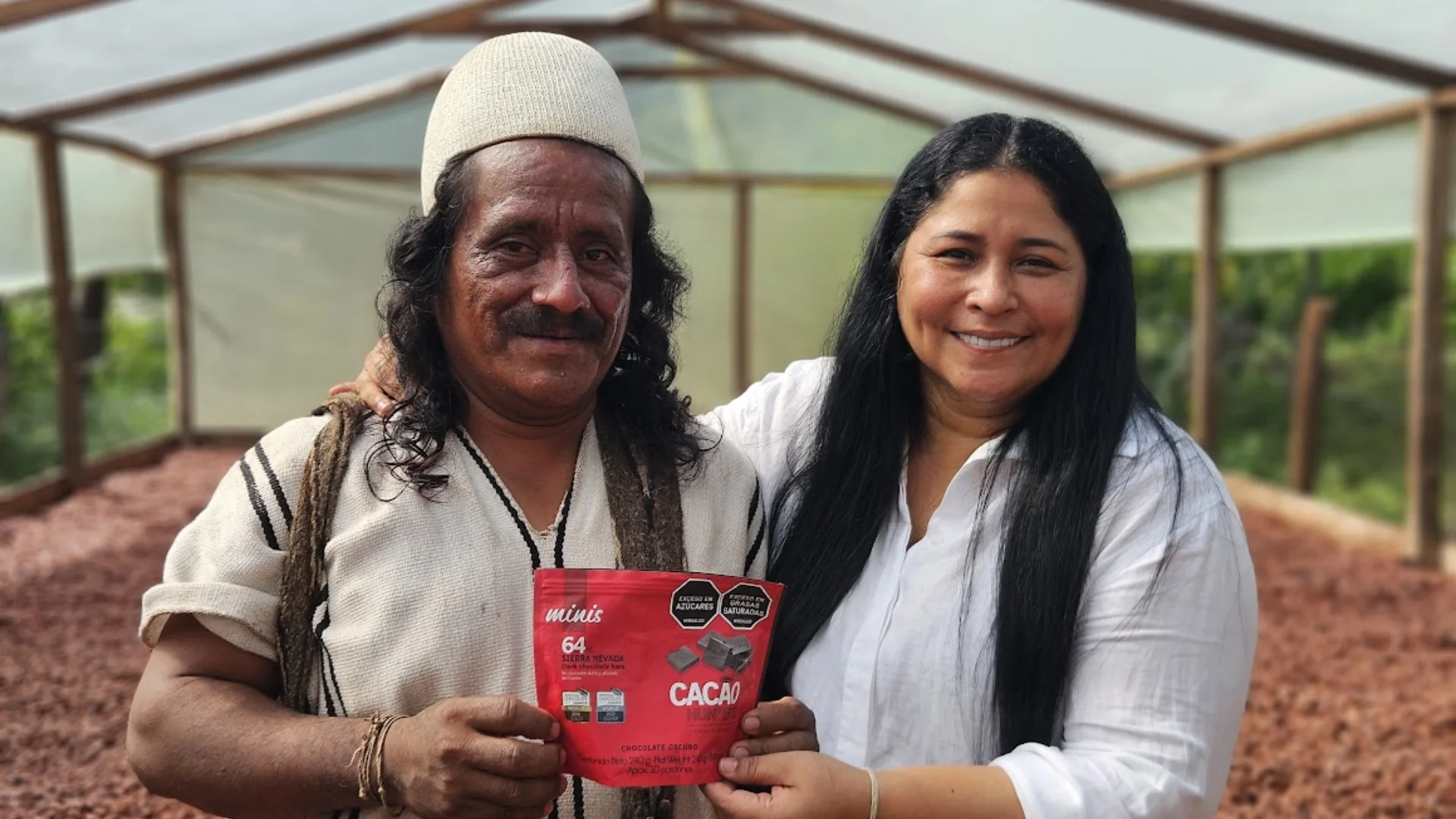
Cacao Hunters' founding origin. Arhuaco territory. The discovery of bunsi — white cacao — that changed everything. 15 years of partnership that remain the backbone of our operations.
In 2025, Cesar (Serranía del Perijá) grew from 27 tons (2024) to 115 tons — a 325% increase. The entire territory was transformed with more specialty cacao producers, stronger associative capacity, and better processing infrastructure.
The Katansama community brought bunzi cacao to the Japanese market. Sierra Nevada established itself as a world-class origin.
Sierra Nevada 64% with Gulupa won the special Biome Prize at the 2025 World Final — an unprecedented recognition of biodiversity as an ingredient.
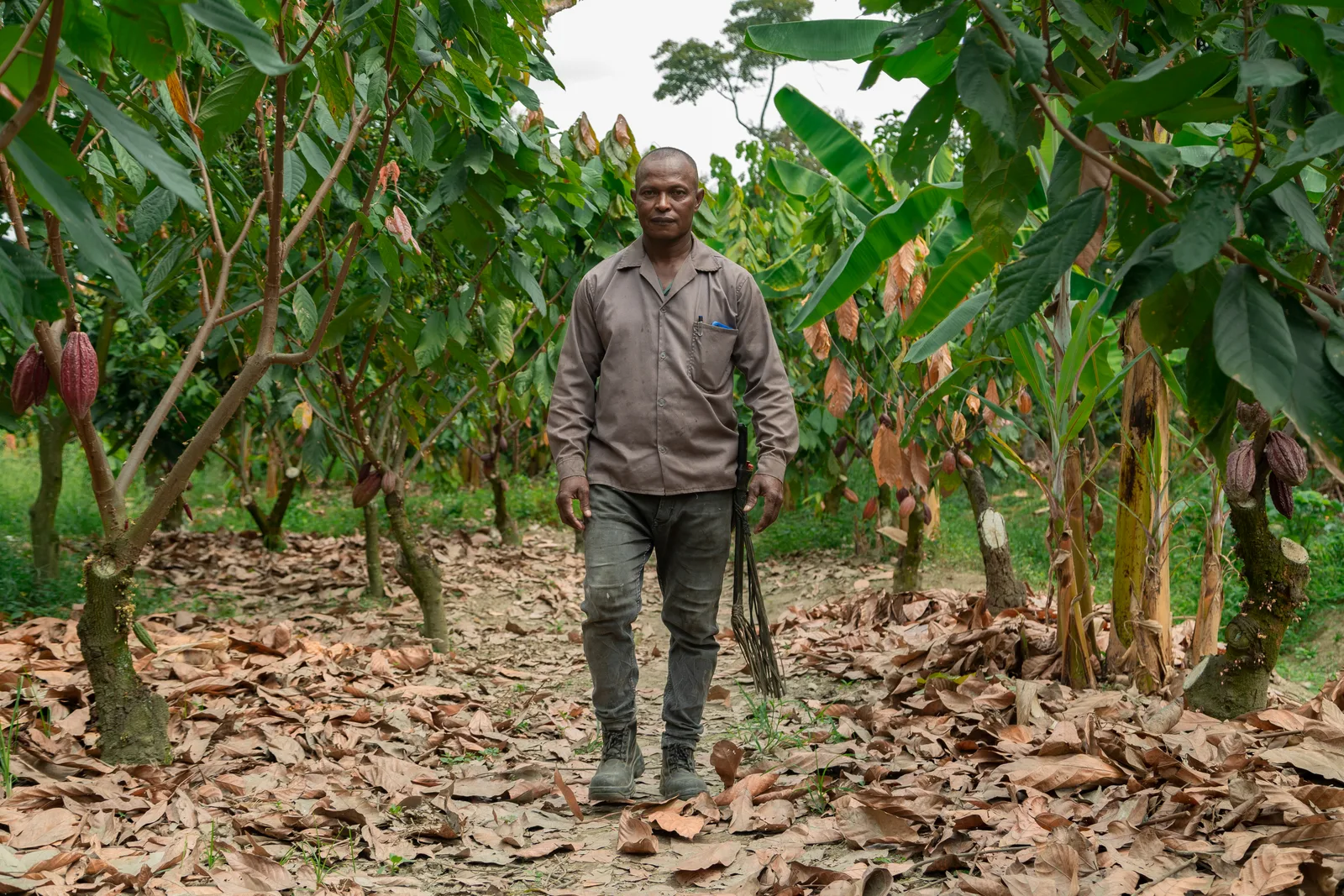
Tumaco
Nariño
Over 1,000 Afro-Colombian families. Origin of the best milk chocolate in the world.
Historically marked by armed conflict. Cacao competes with illicit crops. Permanent logistical challenges. DESPITE all of this: extraordinary cacao with intense sensory profiles — citric, spiced, woody notes.
In 2025, Tumaco Leche 53% won Gold at the International Chocolate Awards World Final — THE BEST MILK CHOCOLATE IN THE WORLD is made with cacao from Afro-Colombian families in Tumaco, a conflict-affected zone.
Proof that exceptional quality can emerge from the most challenging territories.
Tumaco Leche 53% — Gold + Best in Competition at the World Final. The best milk chocolate in the world.
Cauca
Cauca
Our home. Where we make chocolate. Where we dream big.
Popayán is the operational heart of Cacao Hunters — this is where cacao is transformed into single-origin chocolate.
Through the Renacer Origen Cauca (ROC) project, together with Fundación Mundo Mujer, we accompanied 375 producers across 7 municipalities in the north of the department: Miranda, Padilla, Guachené, Villa Rica, Puerto Tejada, Santander de Quilichao, and Caloto. Guachené and Padilla concentrated 68.4% of all cacao commercialized.
Between October 2024 and July 2025 we ran 69 collection routes for cacao en baba directly from the farms. 351 producers signed commercial agreements and sold their cacao, generating COP $623.7 million in direct income. 77.8 tons of fresh cacao purchased at prices above the regional average — a quality-differentiated market where before only undifferentiated dry bean sales existed. 369 families gained bank access. The model even attracted 36 producers from outside the project who chose to sell through us for the economic advantages.
Three community-based organizations — Rescate Cacaotero, Asofintra, and Fundemerca — were contracted for collection logistics, strengthening the local organizational fabric. 12 young cacao farmers visited our plant in Popayán, where they learned about fine-flavor cacao, toured the full transformation process, and conducted sensory tastings with Cauca cacao.
The project left behind infrastructure, installed capacity, banked families, and relationships that endure. The challenges we faced are shared in our Lessons section.
375 producers accompanied. COP $623.7M transferred. 369 families banked. Installed capacity that remains.
Arauca
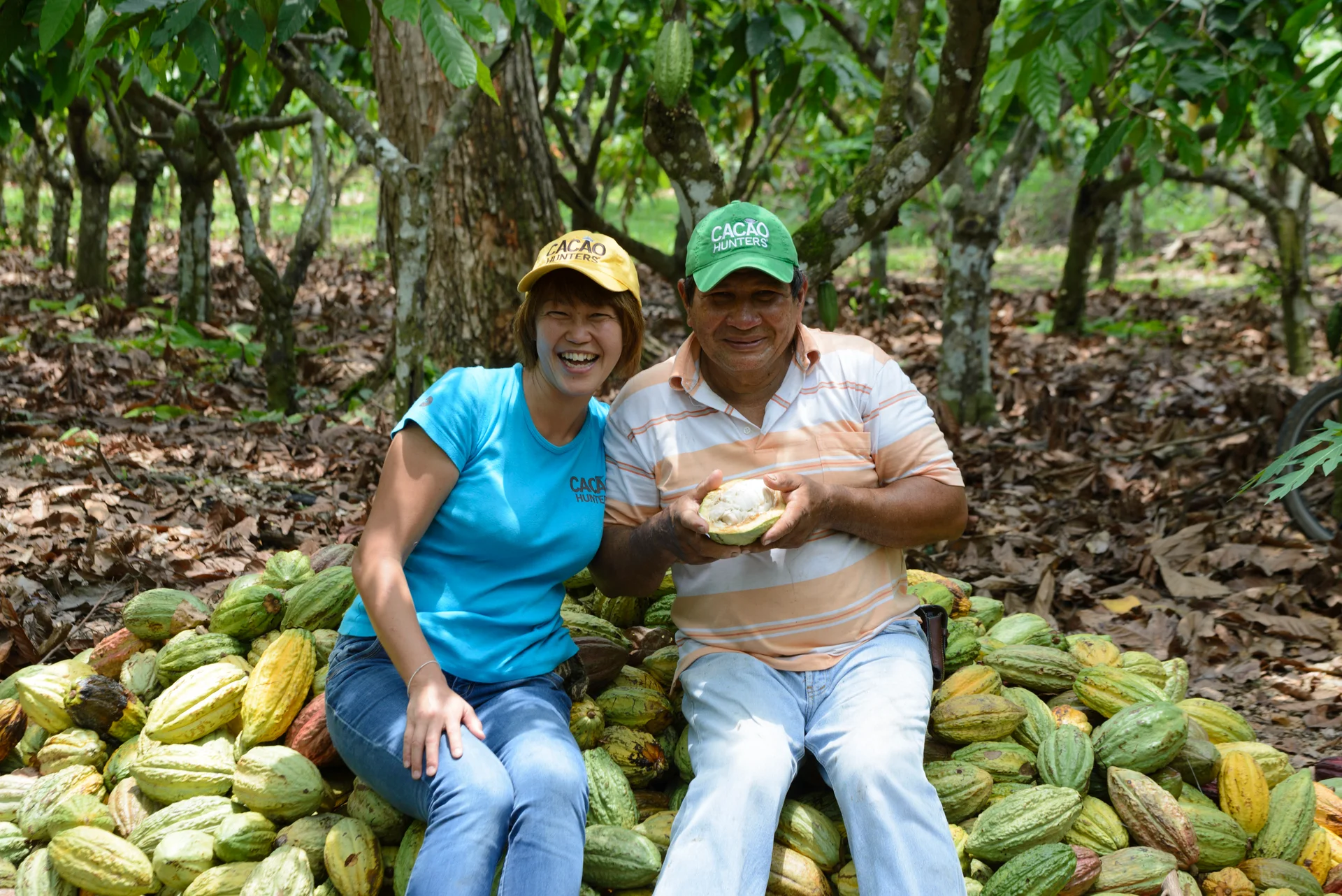
Arauca
15 years. One finca. Proof that precision matters.
Elizabeth Agudelo and Finca Villa Gaby. Precision in selection since 2011.
4 tons in 2025 with a premium over the local market. Few kilos compared to Sierra or Tumaco, but every bean proves that protecting the heritage of fine-flavor cacao is viable and profitable.
Arauca 70% has won awards in 5 different editions of the ICA, including Best in Competition Americas in 2023. 15 years of partnership = 15 international awards.
15 years of partnership = 15 international awards.
Meta
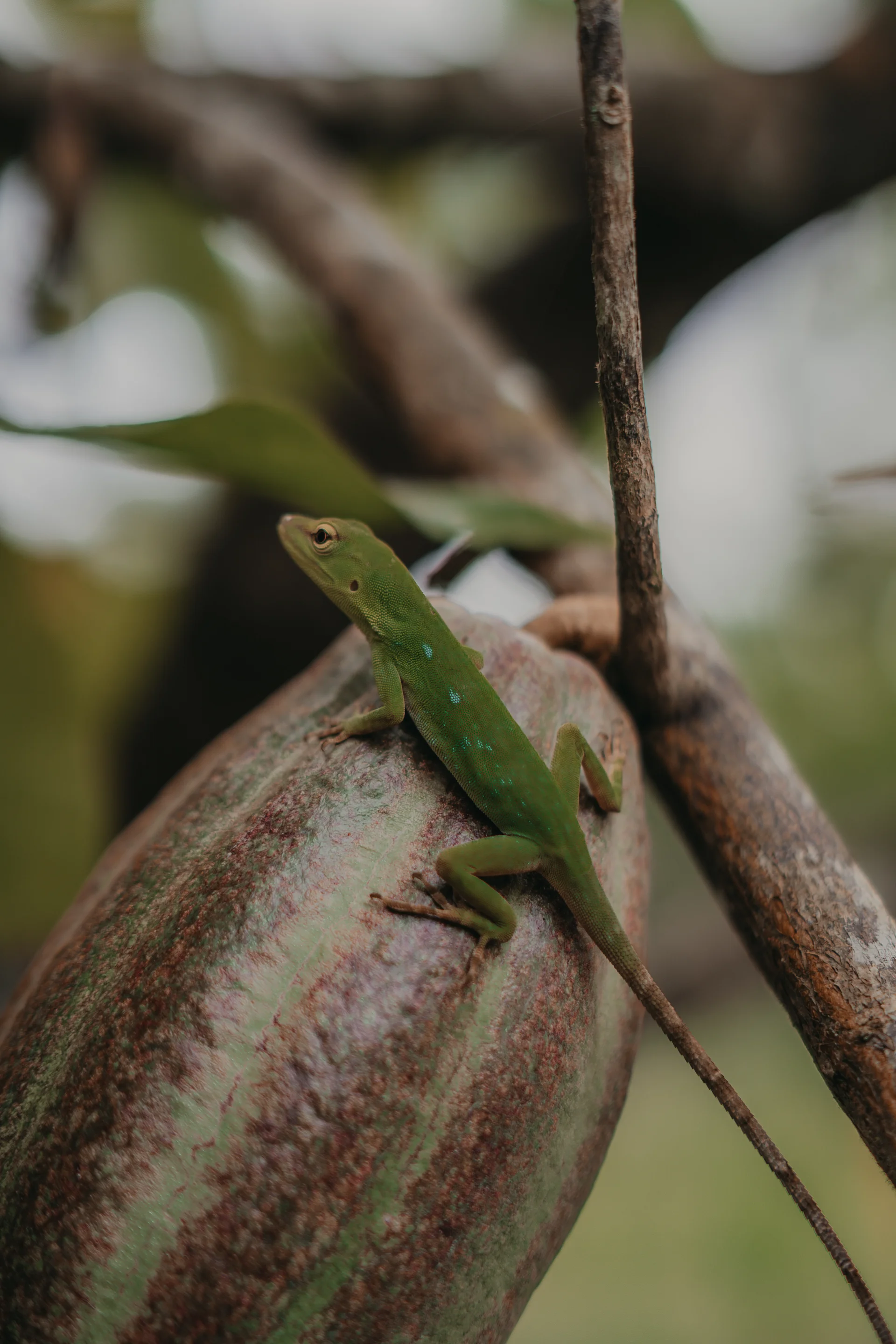
Meta
New territory. Fruity and expressive profiles. The future.
One of the youngest and most promising origins.
14.2 tons in 2025 with a premium over the local market.
Fruity, expressive sensory profiles, different from the existing portfolio. A territory with enormous growth potential for 2026.
Fruity and expressive profiles. Enormous growth potential for 2026.
Huila y Tolima
Huila, Tolima
Mountain cacao competing with the coffee tradition.
Grows in traditionally coffee-growing zones. Unique sensory profiles of mountain cacao.
Nearly doubled their presence vs. 2024. 9.7 tons commercialized.
Tatacoa 70% is already gaining international recognition. Diversification works for these communities.
Tatacoa 70% is already gaining international recognition.

Antioquia
Antioquia
The most incipient origin. Pilots in Urabá and Bajo Cauca. The next big story.
Pilot phase — focused on mutual understanding.
Building relationships before building numbers.
Building relationships before building numbers.
Want to taste this cacao?
Connect directly with our commercial team to explore our origins.
Get in touchCamila Santoyo · Head Trader
Lessons & Challenges
Our impact is built day by day. We are proud of what we have achieved in 15 years — real changes in the industry and in the lives of thousands of families. But we are not perfect, and every year brings challenges and lessons. This is one of the most important from 2025:
Renacer Origen Cauca Project
For over three years we worked on this project with the conviction that Cauca, our home, had the potential to develop exceptional cacao under a sustainable, regenerative model that could empower hundreds of families in the north of the department. From the beginning, Fundación Mundo Mujer believed in this vision and became our partner to make it a reality.
- In 2025 came the hardest stage: putting the commercial model into practice. We committed to purchasing all the fresh cacao from the project's producers and handling the post-harvest ourselves. We invested in new installed capacity, time, and resources to make it work.
- But we faced challenges we did not foresee. The cacao from the region had cadmium levels above what our international markets accept — we could not export it. We tried to innovate with alternative solutions, but the accumulated inventory without a market became a serious budget problem. On top of that, ongoing public order issues created logistical obstacles that were difficult to resolve.
- After many iterations, we had to pause and step away from the original commercial model. We could not continue being the project's commercial partner.
- It was a hard blow. It forced us to sharpen our focus and build stronger prioritization. Impact drives everything we do. But we must protect the business, because without business there is no impact.
The lesson from Cauca is already being applied. In 2026 we are focused on consolidating the origins where the model works — Sierra Nevada, Tumaco, Perijá — and on deepening relationships with Meta, Huila, and Tolima before scaling. We will also continue measuring our impact at every level, because what is not measured cannot be improved.
Want to be part of this model?
Invest in a model where everyone wins. Let's talk about partnering.
Become a partnerGabriel Pérez · Impact Manager
Awards That Make Us Proud
192 medals in 10 years
La marca de chocolate más premiada de Colombia.
La mayoría de nuestras medallas provienen del International Chocolate Awards, el certamen independiente de chocolate fino más prestigioso del mundo, fundado en 2012.
Este certamen reconoce la excelencia en la elaboración de chocolate fino y los productos elaborados con él, apoyando a empresas, chocolateros y cacaoteros que cultivan el cacao fino en zonas productoras alrededor del globo.
Awards are not the goal. They are the consequence. Each medal is the validation of a system that starts at the finca, passes through the association, is transformed in Popayán, and arrives at a judging table that knows nothing about our story — they only taste the chocolate.
Top 3
los más premiados
2015-2025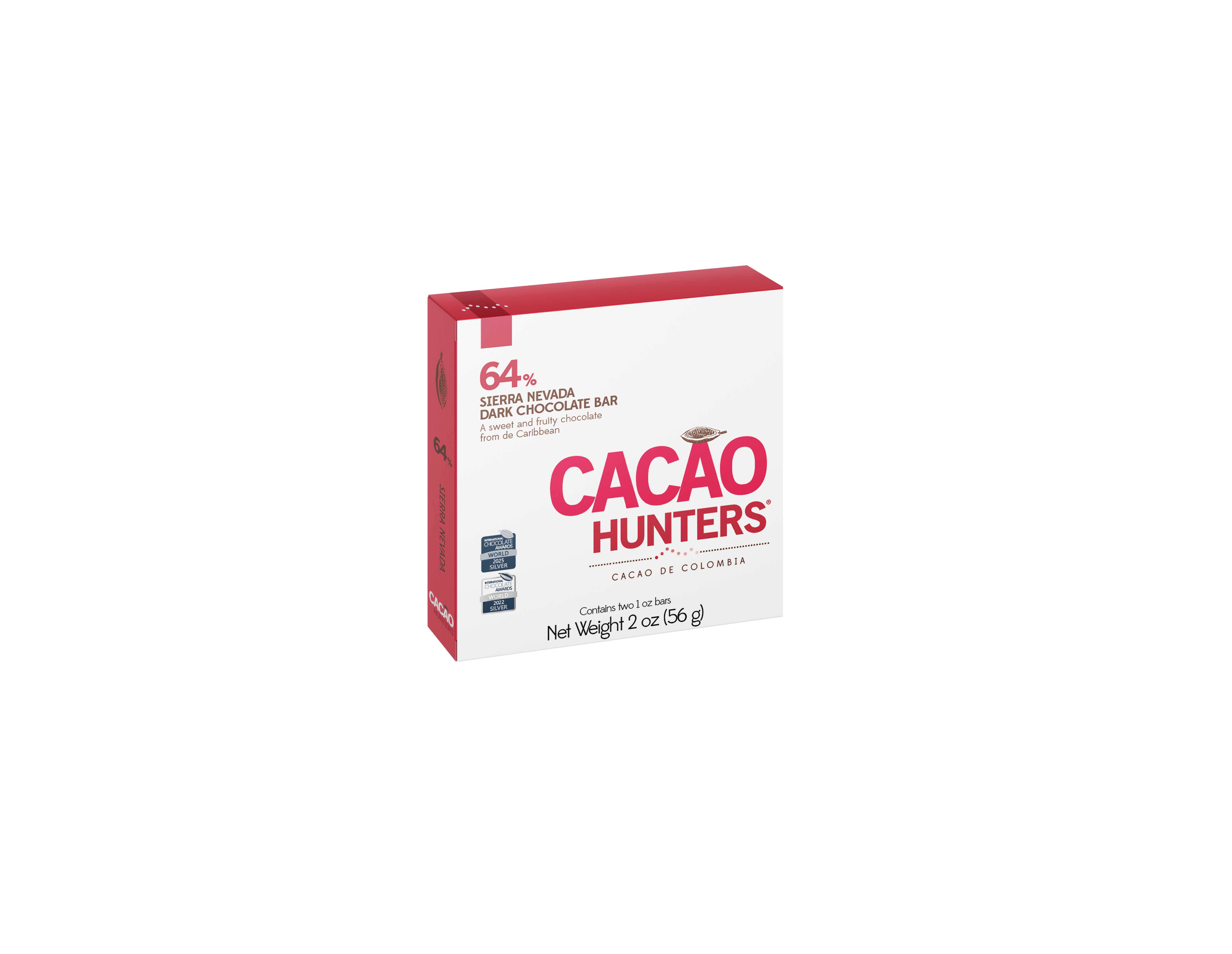
Sierra Nevada 64%
3 Oro
12 Oros en Direct Traded, Growing Country, Chocolate Maker.
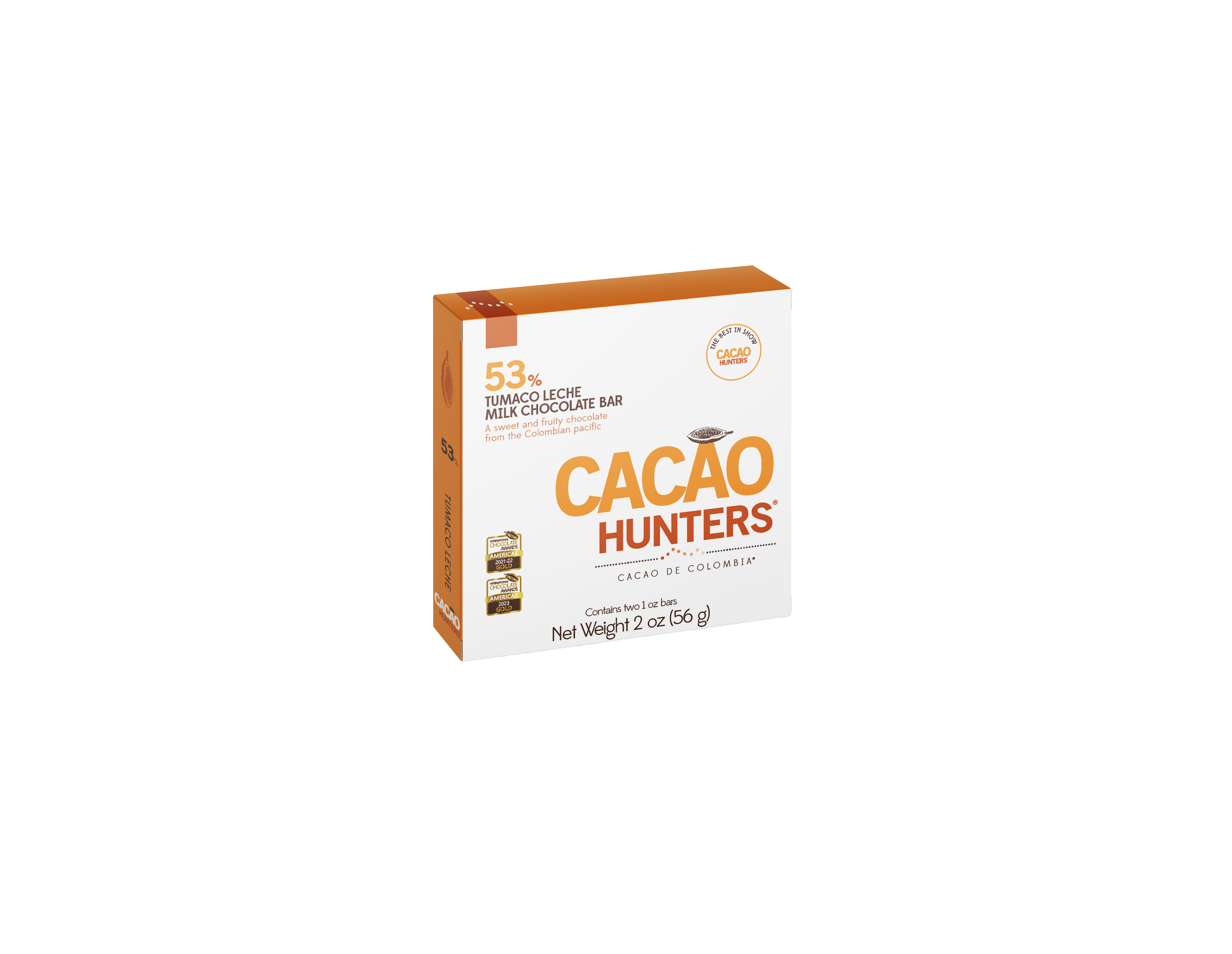
Tumaco Leche 53%
12 Oro
19 Oros en Direct Traded, Growing Country, Chocolate Maker.
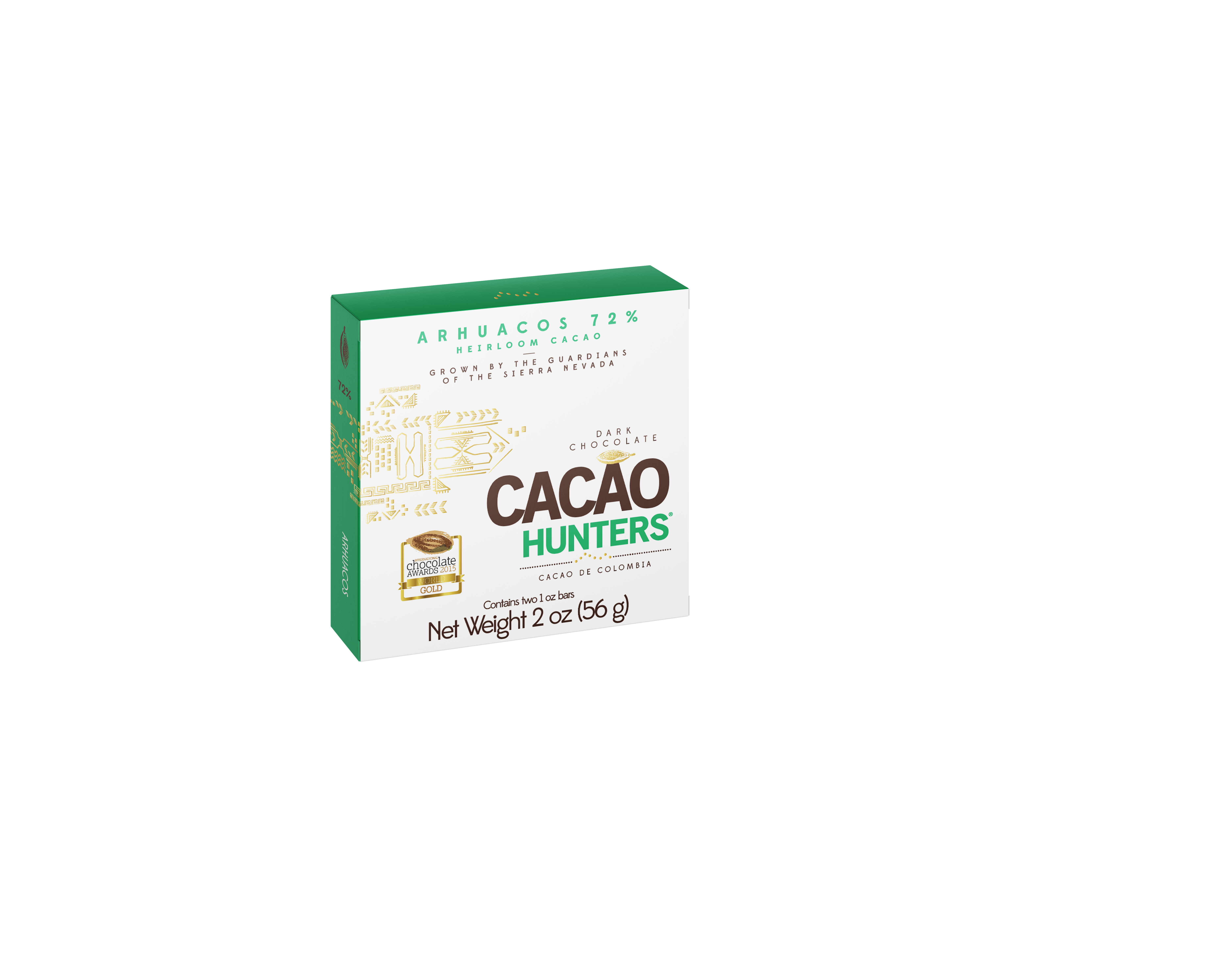
Arhuacos 72%
2 Oro
6 Oros en Direct Traded, Growing Country, Chocolate Maker.
“Each medal smells of Sierra Nevada, of Arhuaca earth, of Arhuaca hands, of Arhuaca wisdom, of Arhuaco cacao.”
Want to taste our chocolate?
Taste the origin. Join the purpose. Visit our store.
Visit cacaohunters.com
From the Origins
From the Sierra Nevada de Santa Marta and the Serranía del Perijá, between Magdalena and Cesar, to the jungles and coasts of Tumaco; passing through the north of Cauca and Popayán, where we produce our chocolate; across the plains of Meta and the savannas of Arauca; through the new origins of Antioquia and the communities of Huila and Tolima.
Each territory was the origin of unique, resilient, and brave stories that prove Colombia has a treasure that tastes of jungle, rivers, seas, mountains, and chocolate.
Share this story
Cacao de Colombia SAS · Fundación Cacao Hunters
Popayán, Cauca, Colombia